Quilt Size Guide
A 50 × 65-inch quilt is a practical throw size. For a bed quilt, the mattress size gets you started, but the finished quilt also needs room for the fabric you want hanging down the sides and foot. For example, a 60 × 80-inch queen mattress needs an 84 × 92-inch quilt for a 12-inch drop on both sides and at the foot, with no pillow tuck.
Quilt size chart in inches
Use these as planning examples. The Twin through California King rows use the same 12-inch drop at the sides and foot so you can compare them. The baby and throw sizes are standalone project examples.
| Project | Typical US mattress | Example quilt |
|---|---|---|
| Baby quilt | — | 39½ × 41½ |
| Throw | — | 50 × 65 |
| Twin | 39 × 75 | 63 × 87 |
| Twin XL | 39 × 80 | 63 × 92 |
| Full / double | 54 × 75 | 78 × 87 |
| Queen | 60 × 80 | 84 × 92 |
| King | 76 × 80 | 100 × 92 |
| California king | 72 × 84 | 96 × 96 |
Already have a pieced top? Measure its actual width and length, then use the quilt backing calculator to compare yardage and seam directions.
Mattress measurements are from the APQS quilt size chart. The throw example matches the planning size used by Missouri Star Quilt Co. The baby quilt example comes from the Baby Parachute pattern from Robert Kaufman Fabrics. Use the baby quilt dimensions to plan a play mat or keepsake. For infant sleep, the U.S. Consumer Product Safety Commission recommends a fitted sheet only in the crib.
How to measure a bed for a quilt
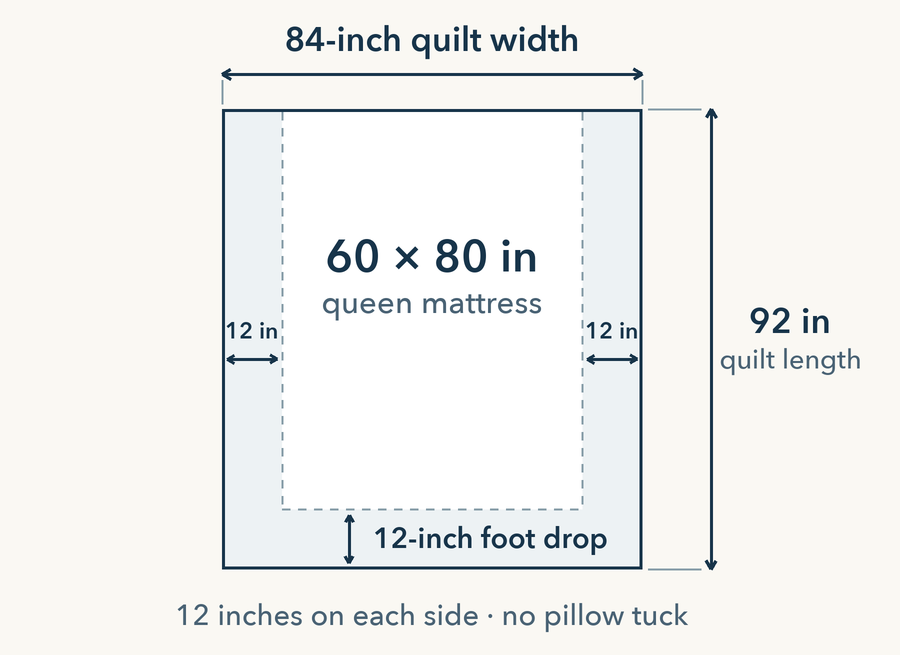
- Measure across the top. Leave the topper or bedding that will sit under the quilt in place. Measure width and length from edge to edge.
- Choose a side drop. Hold the tape at the top edge and measure down to where you want the quilt to end. Add the left and right drops to your width. If both are the same, add twice the side drop.
- Choose a foot drop. Measure it separately if there’s a footboard or you want the quilt to stop sooner. Add it to the length. If you plan to cover or tuck around the pillows, measure that extra length with the pillows in place and add it too.
On the same queen bed, a 12-inch side drop and an 8-inch foot drop give you 84 × 88 inches without a pillow tuck. If a pattern’s size is fixed, work backward from the listed measurements to see how much it will hang over your bed. A different border width may help a pieced design reach your target size. The American Quilter’s Society measuring guide shows where to take each measurement.
Which size should you use for backing?
Use the quilt top’s width and length after you’ve sewn on the borders and before quilting. Use the pattern’s listed top dimensions for an early estimate, then check them against the actual top before cutting. The backing needs room beyond the top. How much depends on your quilting setup, so get the required margin from your longarm quilter if you’re sending the top out.
With your top measurements, extra margin and usable fabric width in hand, try the quilt backing calculator.